
Reading habits have changed a lot over the last decade. Some people still love the feel of a paperback in their hands, while others prefer carrying an entire library on a phone, tablet, or Kindle.
That is why the debate around Print Books vs eBooks is not really about which format is universally better. It is more about which one works better for the way you read, travel, study, or publish.
The biggest difference between eBooks and printed books comes down to experience and convenience. Printed books offer a physical reading experience and a stronger sense of ownership. eBooks, on the other hand, are easier to carry, usually faster to buy, and often more affordable.
If you are trying to decide between the two, this guide will help you compare the practical differences without overcomplicating the choice.
What Is the Difference Between eBooks and Printed Books?
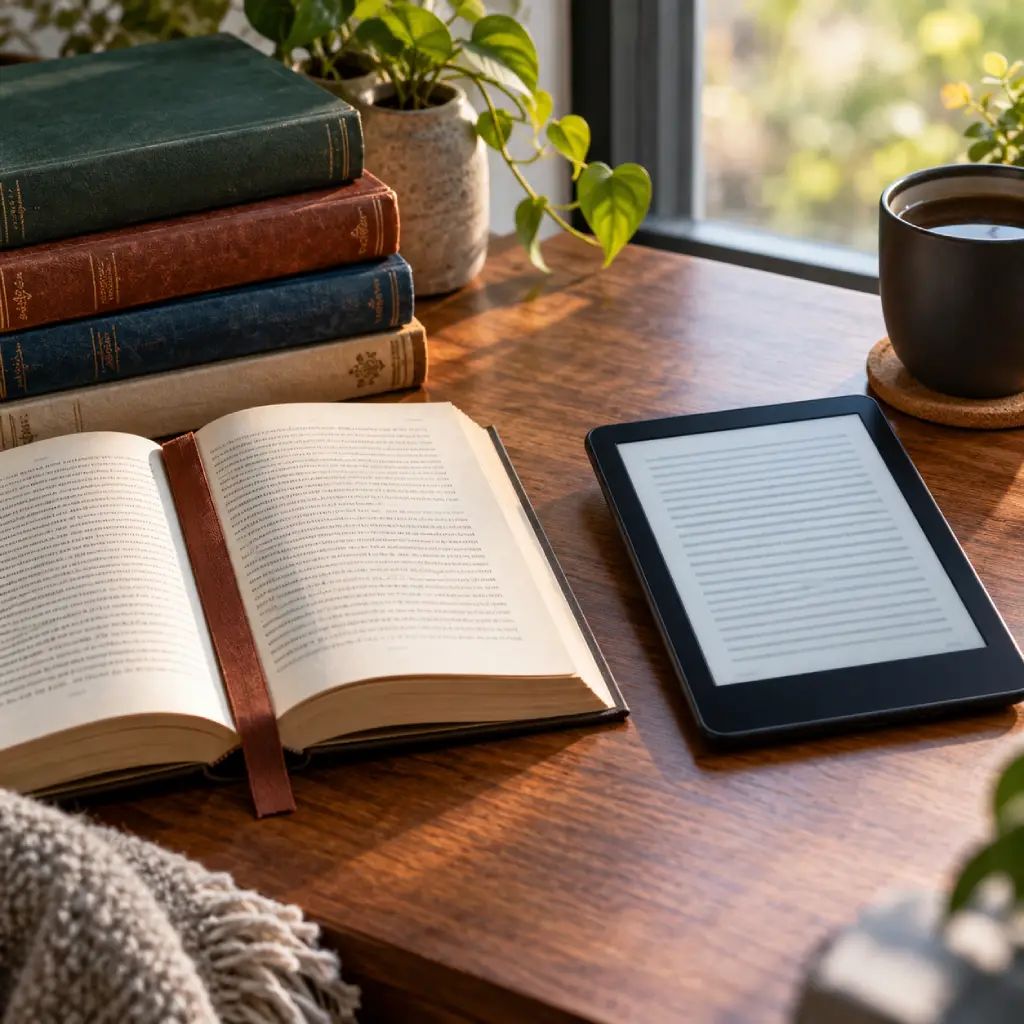
The simplest answer is this:
Printed books are physical copies that you can hold, store, lend, and display, while eBooks are digital files that you read on devices such as smartphones, tablets, computers, or e-readers.
That sounds obvious, but the difference affects almost everything about the reading experience.
With a printed book, you turn physical pages, make notes in the margins, use bookmarks, and keep the book on your shelf once you finish it.
With an eBook, you can start reading within minutes of buying it. You can change the font size, search for words, highlight passages digitally, and carry hundreds of books on one device.
Neither option is automatically better. They solve different problems.
Print Books vs eBooks: Reading Experience
Reading experience is often the biggest factor when people compare Print Books vs eBooks.
Why Some Readers Still Prefer Printed Books
A printed book gives you a physical sense of progress.
You can see how far you have read, flip back a few pages quickly, underline something with a pen, or leave a sticky note where you want to return later.
Many readers also find printed books easier to focus on because there are no notifications, messages, or other apps fighting for attention.
There is also something familiar about sitting with a book without looking at another screen, especially after spending most of the day on a laptop or phone.
For novels, biographies, coffee-table books, and long-form reading, print can feel more relaxed and less distracting.
Why eBooks Can Be Easier to Read
eBooks are much more flexible.
You can increase the font size, adjust brightness, switch to dark mode, search within the text, and sometimes change the background colour.
That can be especially useful for people who find small print uncomfortable.
If you travel frequently, eBooks are also hard to beat. Instead of carrying three or four books in your luggage, you can keep dozens on one device.
For readers who move between home, office, and travel, that convenience often matters more than the physical feel of a book.
Cost: Are eBooks Cheaper Than Printed Books?
In many cases, yes.
eBooks often cost less because there is no printing, binding, warehousing, or physical shipping involved. However, pricing varies by publisher, platform, and title.
Printed books may cost more upfront, but they also offer something digital books generally do not: a physical item that you can keep, gift, resell, or sometimes lend freely.
There are also other costs to consider.
To read eBooks comfortably, you may eventually buy an e-reader or tablet. You do not necessarily need one, because you can read on your phone or computer, but a dedicated device usually provides a better experience.
Printed books do not require any device or battery. Once you own the book, you can simply pick it up and read.
So, if price is your main concern, eBooks may be cheaper over time, particularly if you read frequently.
Convenience and Portability
This is one area where digital books have a clear practical advantage.
Imagine going on a two-week holiday and wanting to read four books. Carrying four hardcovers is not exactly convenient.
An e-reader solves that problem immediately.
You can carry hundreds or even thousands of books on a device that weighs less than a typical paperback.
eBooks are also useful when you want a book immediately. There is no delivery time and no need to visit a bookstore. You can purchase a title and start reading within minutes.
Printed books require more space. If you are an enthusiastic reader, your collection can quickly fill shelves, cupboards, and storage boxes.
That said, some readers see this as a positive. A personal library can become part of a home and reflect the books, ideas, and stories that have mattered to you over the years.
Ownership: Do You Really Own an eBook?
This is one of the less obvious differences between physical and digital books.
When you buy a printed book, the copy belongs to you. You can keep it, give it to a friend, donate it, or sell it.
With eBooks, things can be different.
Digital purchases are usually tied to a platform, account, or licensing agreement. What you can do with the file depends on the store and the digital rights attached to it.
You may not be able to resell an eBook or lend it in the same way you would lend someone a paperback.
For most readers, this does not cause problems in everyday use. Still, if long-term ownership matters to you, printed books have the simpler model.
Authors should think about ownership and rights from the publishing side too. If you are working with someone else to create a book, it is worth understanding who legally owns the finished manuscript. Our guide to a ghostwriting copyright agreement explains some of the issues authors should consider before publishing.
Print Books vs eBooks for Authors
Readers are not the only people who have to choose between formats.
Authors face the same decision when publishing.
In many cases, the best answer is not to choose just one.
Publishing both print and digital versions allows readers to buy the format they prefer.
Advantages of eBooks for Authors
eBooks can be relatively simple to distribute because there is no inventory to manage.
Authors can make their books available internationally through digital platforms without printing thousands of copies first.
Updates are also easier. If you notice a typo or want to revise part of the book, updating a digital edition is generally easier than correcting already printed stock.
Advantages of Printed Books for Authors
Printed books still carry a sense of permanence.
They are useful at book launches, events, speaking engagements, signings, and conferences.
Readers can give them as gifts, libraries can place them on shelves, and authors can use physical copies for promotional purposes.
A printed book can also feel more tangible to a first-time author. After months of writing and editing, holding the finished book is a very different experience from seeing the same manuscript on a screen.
If you are considering hiring help with your manuscript, you may also want to read our guide on whether a ghostwritten book is worth it.
Which Format Is Better for Students and Research?
There is no single answer here either.
Printed books can work well when you are studying deeply, moving between chapters, taking handwritten notes, or trying to stay away from digital distractions.
eBooks can be better when speed matters.
You can search for a specific term instantly rather than scanning an index. Highlighting and exporting notes may also be easier depending on the platform.
For academic or professional research, digital books are especially useful when you need to reference many sources quickly.
A lot depends on how you study.
If you remember information better after writing notes by hand, print may work better.
If you mainly need search, accessibility, portability, and quick reference, digital is likely to be more practical.
Environmental Considerations
The environmental comparison between printed books and eBooks is more complicated than it first appears.
Printed books require paper, printing, transportation, and storage.
Digital reading avoids printing each individual copy, but electronic devices also require raw materials, manufacturing, energy, and eventual disposal.
The better option often depends on how much you read and how long you keep your devices.
If someone buys an e-reader and uses it for years to read hundreds of books, the calculation looks very different from someone who reads only one or two books digitally.
Similarly, second-hand books, libraries, book exchanges, and passing books between friends can extend the useful life of printed copies.
So environmental impact is worth considering, but it should not be reduced to the simple idea that digital is always greener.
Print Books vs eBooks: Quick Pros and Cons
Printed Books
Pros:
- Physical reading experience
- Easy to lend, gift, or resell
- No battery required
- Fewer digital distractions
- Looks good in a personal library
- Useful for events and author signings
Cons:
- Takes up storage space
- Can be heavier to carry
- Usually takes longer to receive
- Some editions may cost more
eBooks
Pros:
- Easy to carry
- Instant access
- Adjustable font size
- Searchable text
- Often cheaper
- Convenient for travel
Cons:
- Requires a device
- Screen reading does not suit everyone
- Digital ownership can be restricted
- Cannot always be resold or shared freely
How Should You Choose Between Print Books and eBooks?
Think about your normal reading habits rather than trying to decide which format is objectively better.
Choose printed books if you:
- Enjoy the physical experience of reading
- Like collecting books
- Prefer reading without screens
- Frequently lend or gift books
- Make lots of handwritten notes
Choose eBooks if you:
- Travel regularly
- Read several books at once
- Need adjustable text sizes
- Want instant access to books
- Have limited storage space
- Prefer searchable and digital notes
You can also use both.
Many readers buy eBooks for everyday reading and travel while keeping printed editions of books they particularly enjoy.
There is no rule saying you have to belong to one side of the debate.
What Should Authors Choose: Print, eBook, or Both?
For most independent authors, offering both formats can make sense.
Some readers actively prefer physical books. Others rarely buy them and read almost everything digitally.
Offering multiple formats gives the reader the choice instead of making the decision for them.
Before publishing, though, authors should make sure the manuscript itself is ready.
That means editing, formatting, cover design, copyright considerations, and clear agreements with anyone involved in creating the book.
If you plan to work with a ghostwriter, knowing how to choose the right professional matters just as much as deciding how the finished book will be published. You can read our guide on how to identify a professional ghostwriter.
It is also worth understanding what should be included in a ghostwriting contract and NDA before work begins.
FAQs About Print Books vs eBooks
Are eBooks better than printed books?
Not necessarily. eBooks are generally more portable and convenient, while printed books offer a physical reading experience and straightforward ownership. The better option depends on how and where you read.
Is reading an eBook cheaper than buying printed books?
Often, yes. Digital editions are frequently cheaper than physical copies, although the price difference depends on the book and publisher.
Which is better for your eyes: eBooks or printed books?
Some readers find paper more comfortable because it does not involve a backlit screen. However, dedicated e-readers often use displays designed to resemble paper and allow users to adjust text size and lighting.
Can eBooks replace printed books completely?
For some readers, they already have. For others, no. Printed books remain useful for collecting, gifting, studying, events, and readers who simply prefer paper.
Should a new author publish an eBook or printed book first?
It depends on the audience and publishing strategy. Digital publishing can make distribution easier, while printed copies are valuable for direct sales, events, gifts, and readers who prefer physical books. Many authors choose to release both.
Final Thoughts
The difference between eBooks and printed books goes far beyond paper versus screen.
Printed books offer a tactile reading experience, simple ownership, and the pleasure of building a physical collection. eBooks offer portability, accessibility, instant delivery, and the ability to carry an entire library almost anywhere.
When comparing Print Books vs eBooks, the right answer depends on what matters most to you.
If you value convenience, travel frequently, or want quick access to books, an eBook may make more sense. If you enjoy collecting books, reading away from screens, or turning actual pages, print may still be your preferred format.
And there is nothing wrong with choosing both.
If you are planning to write and publish your own book but need support turning your idea into a finished manuscript, Ghostwriting India can help you through the writing and development process.


