
You’ve finally decided to write that book you’ve been thinking about for years. Maybe it’s your life story, a business book, or a novel you’ve never found time to finish. You’ve got the ideas, but putting them into words is another matter.
So, you start looking for a ghostwriter.
Within days, your inbox fills with offers. Some writers promise a finished book in two weeks. Others claim they can turn your manuscript into an Amazon bestseller. A few quote prices so low that you wonder how they make any money.
How do you know whom to trust?
That’s where a ghostwriter hiring checklist becomes useful. Hiring the wrong person can cost you more than money. You could lose months of work, share personal information with someone unreliable, or end up with a manuscript you can’t publish.
The good news? Most questionable offers come with warning signs. You just need to know what to look for.
In this guide, we’ll cover seven red flags, explain how to avoid common ghostwriting scams, and help you choose someone who can actually do justice to your story.
Why Do Ghostwriting Scams Happen?

Ghostwriting is built on trust. You’re paying someone to write in your voice, often using personal experiences, professional knowledge, or sensitive information.
Unlike buying a physical product, you can’t always judge the quality of a ghostwriting service before the work begins.
A polished website doesn’t necessarily mean there’s an experienced writer behind it. And a convincing sales pitch doesn’t guarantee a good manuscript.
Some services take advance payments and disappear. Others outsource projects without telling clients. Then there are writers who deliver poorly written, copied, or heavily AI-generated material without disclosing their process.
Not every disappointing experience is a scam. Sometimes it’s simply a mismatch between the writer and the client.
Still, knowing what genuine professionals do differently can help you avoid both situations.
7 Red Flags to Include in Your Ghostwriter Hiring Checklist
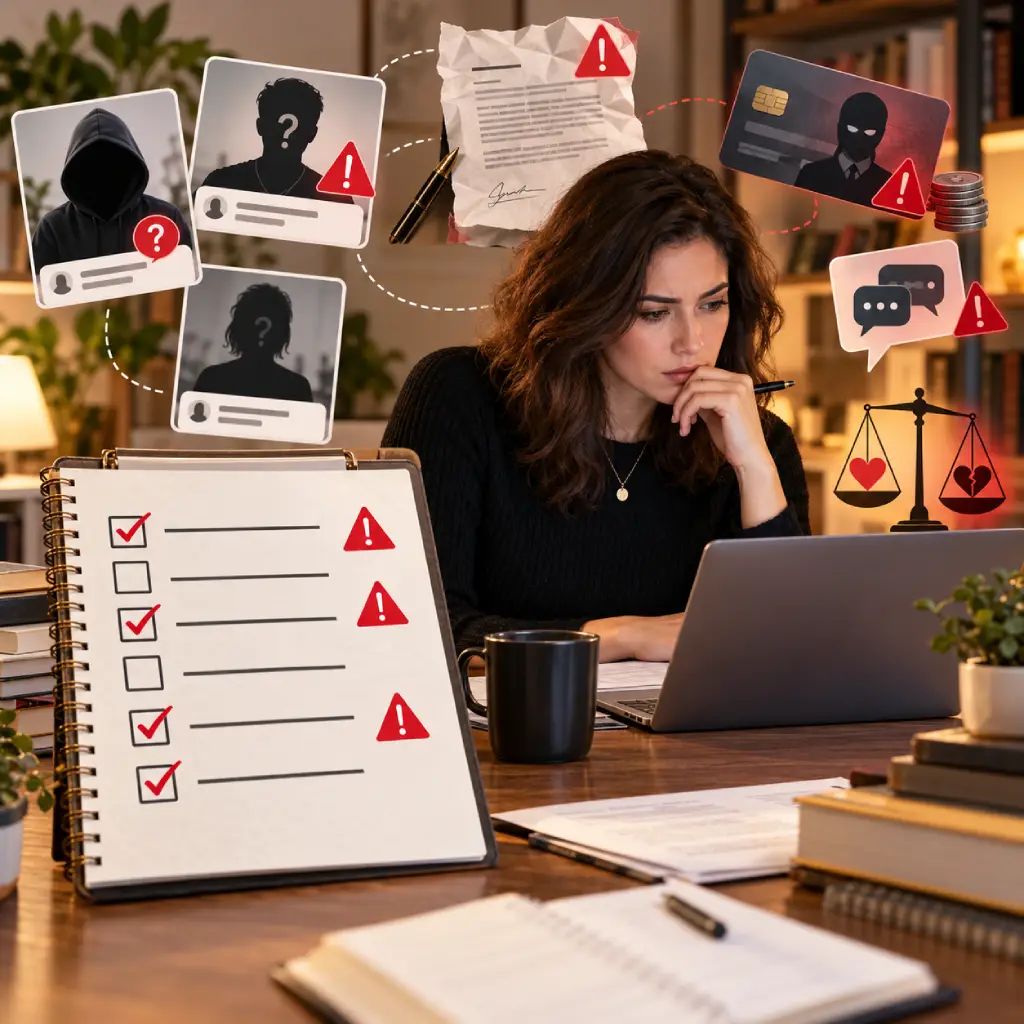
Before signing a contract or transferring any money, pay attention to these warning signs.
1. The Ghostwriter Refuses to Share Writing Samples
Imagine hiring a photographer who won’t show you any photographs.
You probably wouldn’t do it.
The same logic applies to ghostwriting.
An experienced ghostwriter should be able to demonstrate their writing ability. They may not be allowed to reveal previous clients because of confidentiality agreements, but they should have some way to show their skills.
That could include anonymised excerpts, publicly credited work, or an original sample.
What should you check?
Look at whether the writer can handle your type of book. Someone who writes excellent business articles may not be the best choice for an emotional memoir.
Read their samples carefully. Does the writing flow naturally? Is it engaging? Does every paragraph sound the same?
If possible, request a short paid trial based on your book idea.
A writer who refuses to provide any evidence of their ability, while demanding a large advance payment, deserves extra scrutiny.
2. They Promise Bestseller Status or Guaranteed Publishing Success
Here’s something worth remembering: no ghostwriter can guarantee that your book will become a bestseller.
A writer can help develop your ideas, structure your manuscript, and improve the storytelling. But book sales depend on many other things, including marketing, distribution, reader interest, and competition.
Be especially careful with services promising:
-
Guaranteed Amazon bestseller rankings
-
Immediate publishing contracts with major publishers
-
Thousands of book sales within weeks
-
Media coverage without any marketing effort
These claims are particularly concerning when they’re used to pressure you into making an immediate payment.
A professional writer should explain what they can deliver, not promise results outside their control.
For a clearer understanding of what writers can realistically offer, read our guide on ghostwriting client expectations.
3. The Pricing Is Suspiciously Low or Completely Unclear
Everyone wants a good deal. But writing a book takes time.
A 50,000-word manuscript involves much more than typing. Depending on the project, the writer may need to interview you, research the subject, prepare an outline, write multiple drafts, and revise chapters.
If someone offers to complete everything for an unusually low price, ask how they plan to deliver it.
Low pricing alone doesn’t prove dishonesty. New writers sometimes charge less while building their portfolios.
The real problem begins when the seller cannot explain what’s included.
For example, a service might advertise a book-writing package for ₹10,000. Later, you discover that editing, research, revisions, and formatting all cost extra.
Suddenly, the affordable package isn’t affordable anymore.
Before accepting a quote, ask for a written breakdown of the total cost. It should clearly mention the expected word count, number of revisions, payment schedule, and any additional charges.
Compare multiple proposals based on deliverables, not just the final price.
4. There Is No Written Agreement or Copyright Clarity
This is one of the biggest red flags on any ghostwriter hiring checklist.
A verbal agreement might feel convenient, especially when the writer seems friendly and trustworthy.
But what happens if there’s a disagreement about deadlines, payments, or ownership of the manuscript?
Without written terms, resolving the situation becomes much harder.
A proper ghostwriting agreement should explain:
-
Project scope and expected deliverables
-
Payment milestones and refund conditions
-
Deadlines and revision limits
-
Confidentiality requirements
-
Copyright ownership and transfer terms
-
Procedures for cancellation or disputes
Pay particular attention to copyright.
Don’t assume that paying for a manuscript automatically gives you every right you need. Ownership and assignment rules can depend on the contract and applicable law.
For example, in India, copyright assignments generally need to be documented in writing with the relevant terms clearly stated.
You can explore this topic further in our guide to ghostwriting copyright agreements.
If a writer refuses to sign a reasonable agreement, consider it a serious warning.
Common Ghostwriting Scams That Are Easy to Miss
Some warning signs aren’t obvious during the first conversation. They only appear after you’ve started discussing your project.
5. They Demand Full Payment Before Starting
An advance payment is normal in ghostwriting.
Writers need to reserve time, review your material, and begin the research or planning process. Asking for a deposit doesn’t automatically mean something is wrong.
However, demanding the entire project fee upfront without a contract, deliverables, or clear refund policy is risky.
A milestone-based structure is usually safer for both parties.
For example, payments might be divided between the initial outline, first set of chapters, complete draft, and final revisions.
This arrangement gives you opportunities to review the work before releasing further payments.
Be cautious if someone keeps insisting that you must pay immediately to secure a special discount.
A legitimate business should give you reasonable time to review the agreement.
6. The Writer Avoids Calls and Gives Vague Answers
Good ghostwriting requires communication.
Your writer needs to understand how you speak, what you believe, and what you want readers to take away from the book.
For memoirs and autobiographies, this becomes even more important.
If a potential ghostwriter avoids every request for a conversation, gives generic answers, or refuses to explain their writing process, investigate further.
Of course, not every writer works through video calls. Some prefer email, questionnaires, or recorded interviews. That’s perfectly reasonable when agreed upon in advance.
The concern is a complete lack of transparency.
Ask simple questions:
“How will you understand my writing voice?”
“Who will actually write my book?”
“What happens if I don’t like the first chapter?”
A genuine professional should be able to answer these without turning every conversation into a sales pitch.
For international projects, communication across time zones also matters. Our article on working with international ghostwriting clients explains why clear schedules and written communication are useful.
7. They Cannot Explain How They Ensure Originality
You hire a ghostwriter because you want a book that reflects your experiences and ideas.
The last thing you need is copied content.
Unfortunately, some unreliable services recycle existing material, produce generic manuscripts, or rely heavily on automated writing tools without telling clients.
AI-assisted writing isn’t automatically dishonest. The real issue is failing to disclose the process or delivering work that doesn’t meet the agreed standards.
Ask your potential writer how they research, draft, and check their work.
Do they verify factual claims? Can they explain their approach to originality? Will they disclose any use of AI tools if you request that information?
A plagiarism screening report can be helpful, although no screening tool can guarantee complete originality.
Remember, your reputation will be attached to the finished book.
It’s worth making sure you know how it was created.
Ghostwriter Hiring Checklist: What to Verify Before Paying
Now that you know the warning signs, how do you make a confident decision?
Use this simple ghostwriter hiring checklist during your initial discussions.
Your pre-hiring checklist
Don’t treat this as a formality.
A writer may have an impressive portfolio but poor communication. Another may communicate well but lack experience in your genre.
The right choice is someone whose writing ability, working style, and contractual terms all make sense for your project.
How to Find a Trustworthy Ghostwriter for Your Book
Avoiding ghostwriting scams is only half the job. You also need someone who can write the book you have in mind.
Start by looking for writers with relevant experience rather than simply searching for the lowest quote.
Read their website, examine their services, and look for evidence of previous work. Client testimonials can be useful, but independent references are even better when available.
You can also request a discovery conversation.
During that discussion, explain your book’s purpose, intended readers, approximate length, and preferred writing style.
Notice whether the writer listens.
Someone who asks thoughtful questions about your story is often a better prospect than someone who immediately promises to handle everything without understanding the project.
It’s also worth learning more about how the ghostwriting industry is evolving, particularly as digital publishing and AI tools change the way manuscripts are produced.
Ultimately, focus on finding a professional relationship that feels transparent from the beginning.
Frequently Asked Questions About Hiring a Ghostwriter
1. How can I tell if a ghostwriter is legitimate?
Review their writing samples, verify their professional background, request references where possible, and discuss their working process. A legitimate ghostwriter should provide clear pricing, realistic deadlines, and a written agreement before substantial work begins.
2. What are the most common ghostwriting scams?
Common problems include fake portfolios, disappearing after receiving payment, hidden fees, copied manuscripts, misleading publishing guarantees, and delivering work that doesn’t match the agreed specifications.
3. Should I pay a ghostwriter upfront?
Paying a reasonable deposit is common. However, paying the full project fee before receiving any work increases your risk. For larger projects, milestone-based payments with clearly defined deliverables offer better protection.
4. Who owns the copyright when I hire a ghostwriter?
Copyright ownership depends on the agreement and applicable laws. Your contract should clearly explain which rights are assigned, when the transfer takes effect, and whether the writer retains any permissions. Seek legal advice if the terms are unclear.
5. Can I hire a ghostwriter from another country?
Yes. Many authors work with ghostwriters in different countries. Before hiring, confirm payment arrangements, communication schedules, confidentiality terms, and which country’s laws will govern your agreement.
Final Thoughts: Your Book Deserves the Right Ghostwriter
Writing a book is a big commitment, even when someone else is helping you put the words together.
You may spend months sharing memories, developing chapters, and reviewing drafts. That’s why choosing the right writer matters so much.
The purpose of this ghostwriter hiring checklist isn’t to make you suspicious of every professional you meet. It’s to help you ask better questions and avoid decisions you might regret.
Take your time. Read the contract. Review the samples. And don’t let a low price or an unrealistic promise influence your decision.
Looking for someone to help turn your ideas into a book?
At Ghostwriting India, we help aspiring authors, entrepreneurs, and professionals develop manuscripts based on their stories, knowledge, and experiences.
Explore our professional ghostwriting services and discuss your book idea with our team. Ask about the writing process, project scope, and available packages before making a decision.
Your story matters. Make sure the person writing it understands why.


