
Why do audiences remember certain cartoon characters years after watching them?
It is rarely because the character has the most detailed costume or the funniest catchphrase. Memorable characters usually combine a distinctive personality, a clear desire, relatable emotions, recognizable visuals, and enough depth to remain interesting across multiple episodes.
For writers, illustrators, animators, and creators, learning how to create memorable cartoon characters is one of the most important parts of developing a successful series. A strong character can carry a simple storyline, inspire emotional attachment, and give audiences a reason to return.
This guide explains how to build cartoon characters who feel original, consistent, entertaining, and capable of growing with the story.
What Makes a Cartoon Character Memorable?
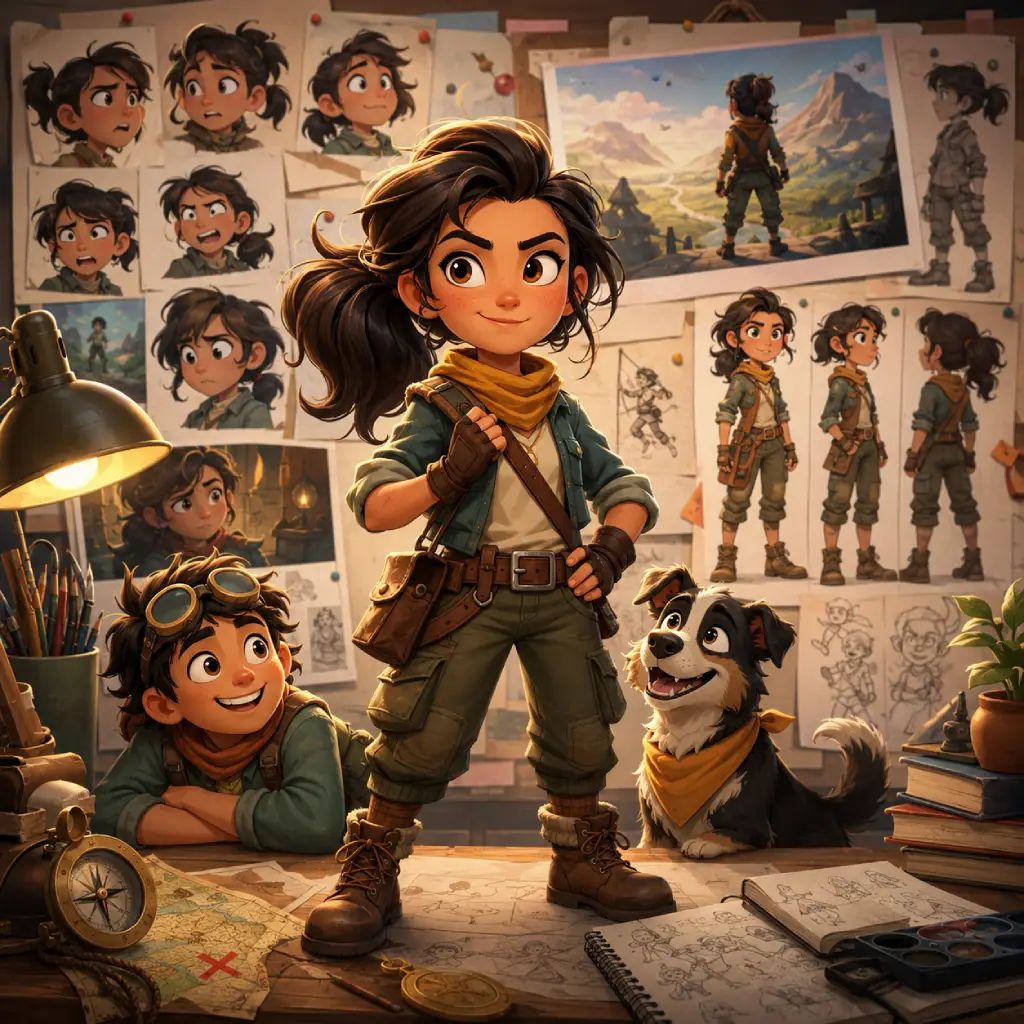
A memorable cartoon character has a clear identity that audiences can quickly understand but cannot completely predict.
The character should usually have:
- A recognizable personality
- A strong goal or motivation
- Emotional strengths and weaknesses
- A distinctive visual appearance
- Consistent behaviour
- Meaningful relationships
- Room for development
The most effective characters are easy to describe in one sentence. However, they also possess enough complexity to remain engaging over an entire cartoon series.
For example, “a fearless young explorer who is secretly afraid of disappointing her family” is more interesting than “a brave girl.” The first description contains both an external quality and an internal conflict.
That contrast gives the writer more material for stories.
Begin With a Strong Character Concept
Before choosing colours, clothes, hairstyles, or special powers, define the basic idea behind the character.
Write a One-Sentence Character Summary
Start by describing the character in one clear sentence. Include their role, dominant personality trait, and central problem.
For example:
- A nervous inventor whose machines work only when he stops overthinking
- A proud village cat who secretly helps every animal in trouble
- A young superhero who can read minds but struggles to understand her own feelings
- A playful ghost who wants to frighten people but becomes friends with everyone
These concepts immediately suggest possible conflicts, jokes, relationships, and episode ideas.
A useful character summary should answer three questions:
- Who is the character?
- What do they want?
- What makes achieving it difficult?
This simple exercise forms the foundation of any effective memorable cartoon characters creation guide.
Match the Character to the Series
A character should feel naturally connected to the cartoon’s genre, audience, and setting.
A preschool character may need simple motivations, expressive emotions, repetition, and reassuring resolutions. A character for older children can have more complicated friendships, moral choices, and emotional conflicts.
Creators writing for younger audiences should also consider how children’s expectations are changing. The article on writing for Gen Alpha readers offers useful insights into creating stories for digitally aware children who expect fast, engaging, and emotionally relevant content.
Build a Distinctive Personality
When learning how to create memorable cartoon characters, personality should receive as much attention as appearance.
A well-developed personality determines how the character talks, reacts, makes decisions, handles pressure, and connects with others.
Choose Dominant and Supporting Traits
Give the character one or two dominant traits that audiences can identify quickly.
They may be:
- Curious
- Impulsive
- Loyal
- Competitive
- Optimistic
- Suspicious
- Dramatic
- Patient
Next, add a supporting trait that creates contrast.
A courageous character may be socially awkward. A highly intelligent character may be impatient. A cheerful character may become deeply anxious when left alone.
These contrasts prevent characters from feeling flat.
Include Strengths and Flaws
Perfect characters are difficult to relate to and often produce weak stories. Flaws create problems, while strengths help characters overcome them.
Suppose a cartoon hero is extremely confident. That confidence may help during a crisis, but it may also cause the hero to ignore advice. One trait therefore creates both success and conflict.
Useful flaws for cartoon characters include:
- Jealousy
- Stubbornness
- Impatience
- Fear of failure
- A need for approval
- Overconfidence
- Distrust
- Poor listening skills
The flaw should influence the plot rather than exist only in the character profile.
Give Every Character a Clear Goal
Characters become more engaging when they actively want something.
Their goal may be large, such as protecting a magical city, or small, such as winning a school contest. What matters is that the desire guides their decisions.
Separate External and Internal Goals
An external goal is something visible that the character wants to achieve.
Examples include:
- Finding a missing object
- Winning a competition
- Solving a mystery
- Returning home
- Saving a friend
An internal goal relates to emotional growth.
The character may need to:
- Develop confidence
- Learn to trust others
- Accept responsibility
- Control their anger
- Stop seeking constant approval
Combining external and internal goals produces stronger stories. A character may try to win a race while gradually learning that teamwork matters more than personal recognition.
When planning longer narratives, secondary storylines can deepen these goals. This subplot creation guide explains how supporting conflicts can strengthen both character development and the main plot.
Design a Recognizable Visual Identity
Cartoon characters must often communicate their personalities before they speak. Their shape, posture, expressions, clothing, and movement should provide immediate clues.
Start With a Strong Silhouette
A character should ideally remain recognizable even when shown as a solid outline.
You can create a distinctive silhouette through:
- Unusual proportions
- A signature hairstyle
- A particular hat or accessory
- A recognizable body shape
- A unique posture
- Large or unusually shaped ears, hands, or feet
Avoid adding random details simply to make the design look complicated. Every major visual feature should support the character’s personality or role.
A disciplined character might have neat clothing and controlled movements. A chaotic inventor may carry mismatched tools, have untidy hair, and move quickly.
Use Colour With Purpose
A limited colour palette usually makes a cartoon character easier to recognize.
Bright colours may communicate energy or optimism, while muted colours can suggest calmness, secrecy, or uncertainty. However, colour meanings are influenced by culture, genre, and context, so avoid treating them as fixed rules.
For an Indian audience, creators can also draw inspiration from regional textiles, festivals, architecture, professions, and everyday environments. Cultural details should feel integrated into the character’s life rather than added as decoration.
Create Expressive Facial Features
Cartoon characters need readable emotions. Their eyes, eyebrows, mouth, and body language should clearly communicate how they feel.
Test the design by drawing the character in several emotional states:
- Excited
- Frightened
- Embarrassed
- Angry
- Confused
- Disappointed
- Proud
If the emotions are difficult to distinguish, simplify or exaggerate the facial features.
Develop a Unique Voice and Behaviour
A character’s voice includes more than the sound of the voice actor. It also includes vocabulary, sentence length, rhythm, humour, reactions, and repeated habits.
Give the Character a Speaking Pattern
One character may speak in short, direct sentences. Another may explain everything in unnecessary detail. A younger character may misunderstand difficult words, while an older mentor may use stories or comparisons.
Catchphrases can help, but they should not replace personality. Repeating the same line too often may make the character feel mechanical.
Instead, develop a consistent way of thinking.
Ask:
- Does the character speak before thinking?
- Do they avoid answering personal questions?
- Do they use humour when nervous?
- Do they exaggerate every problem?
- Do they speak formally or casually?
- Do they interrupt others?
These habits make dialogue recognizable even without the character’s name.
Add Small Behavioural Details
Memorable characters often have repeated actions that reveal emotion.
A character may:
- Adjust their glasses when lying
- Tap their foot when impatient
- Collect unusual objects
- Talk to a pet when worried
- Organize everything by colour
- Hide behind humour when embarrassed
Use these details selectively. Too many habits can make the character feel artificial.
Create Relationships That Reveal Character
No character exists in isolation. Relationships allow different sides of a personality to emerge.
A confident leader may become insecure around a talented sibling. A sarcastic character may become gentle around a younger friend. A nervous child may act courageously when a pet is in danger.
Use Contrasting Character Dynamics
Pair characters with different approaches to life.
For example:
- A careful planner and an impulsive adventurer
- An optimist and a pessimist
- A rule-following student and a creative troublemaker
- A proud hero and an honest best friend
- A logical robot and an emotional child
These contrasts naturally generate humour, tension, and cooperation.
Supporting characters should have their own goals rather than existing only to praise or assist the protagonist. Even a minor recurring character becomes more believable when they have preferences, limitations, and personal stakes.
Writers developing stories for younger audiences can explore the complete children’s book ghostwriting guide for additional guidance on age-appropriate storytelling, character development, and emotional clarity.
Test Whether the Character Can Sustain a Series
A good character concept may work for one scene but fail to generate enough material for multiple episodes.
Before finalizing the character, test their long-term potential.
Ask yourself:
- Can this character face different types of problems?
- Can their flaw repeatedly create fresh conflicts?
- Do they have meaningful relationships?
- Can they change without losing their identity?
- Can younger viewers understand their motivation?
- Is there enough emotional depth for serious and humorous moments?
- Could the character still feel interesting after 20 episodes?
Create at least ten possible episode ideas based only on the character’s goals, flaws, skills, and relationships. If every idea feels similar, the character may need greater depth or a more flexible environment.
Maintain Consistency Without Preventing Growth
Audiences need to recognize the character from episode to episode. However, complete emotional repetition can become boring.
The solution is gradual development.
A selfish character may slowly become more generous but still struggle when sharing something personally valuable. A timid character may become braver while continuing to experience fear.
Growth should influence behaviour without erasing the traits that made the character distinctive.
Common Mistakes in Cartoon Character Creation
Creators often weaken promising characters by making one of the following mistakes.
Copying Familiar Characters Too Closely
Inspiration is normal, but copying another character’s appearance, personality, relationships, and story role will make the result feel unoriginal.
Combine influences from different sources, including real-life observations, cultural experiences, professions, family dynamics, and personal fears.
Focusing Only on Appearance
An attractive design cannot sustain a series without motivation, conflict, and personality. Develop the internal character before polishing visual details.
Adding Too Many Traits
A long list of disconnected characteristics can make the character confusing. Select a few important traits and demonstrate them consistently through action.
Explaining Instead of Showing
Do not simply tell the audience that a character is generous, clever, or jealous. Show the trait through decisions.
A generous character may give away their lunch. A clever character may solve a problem using an ordinary object. A jealous character may pretend not to care when a friend receives praise.
Frequently Asked Questions
How do you create a memorable cartoon character?
Start with a simple concept, give the character a clear goal, combine strengths with flaws, create a recognizable visual identity, and show their personality through consistent actions and relationships.
What makes a cartoon character likable?
A character does not need to behave perfectly to be likable. Audiences usually connect with characters who show understandable emotions, make sincere efforts, care about something meaningful, and occasionally reveal vulnerability.
How many traits should a cartoon character have?
Begin with two or three important traits. One can be dominant, one can create contrast, and one can act as a flaw. Additional qualities can emerge naturally as the series develops.
Should cartoon characters change during a series?
Yes. Gradual emotional growth keeps the character interesting. However, their central personality and recognizable behaviour should remain consistent enough for audiences to identify them.
How can I make my cartoon character original?
Draw from real observations rather than a single existing character. Combine unexpected traits, motivations, cultural influences, relationships, and visual features. Originality often comes from the specific combination rather than one completely new idea.
Conclusion: Turn a Strong Idea Into a Lasting Character
Understanding how to create memorable cartoon characters requires more than designing a colourful appearance. The character needs a clear identity, meaningful motivation, emotional flaws, recognizable behaviour, strong relationships, and enough flexibility to support future stories.
Begin with a simple concept. Test the character through dialogue, visual expressions, conflicts, and episode ideas. Then refine every detail until the character’s appearance, actions, and emotional journey feel connected.
Developing an entire cartoon cast or children’s story can become challenging when you are balancing originality, age suitability, plot structure, and long-term character growth. Professional support can help transform an early concept into a polished and engaging narrative.
Explore our children’s book ghostwriting services to develop distinctive characters, compelling storylines, and reader-friendly content for your next creative project.


