
Today we’re exploring a question that comes up in almost every children’s book project we take on: how do you write for a generation that has never known a world without touchscreens?
Yes, we’re talking about Generation Alpha children born from 2010 onwards and what their habits mean for ghostwriting for the “Gen Alpha” reader. These kids swipe before they scribble, talk to voice assistants before they talk in full sentences, and consume stories across apps, audiobooks, videos, and yes, printed books too.
For authors, educators, and entrepreneurs planning a children’s book, this changes the brief entirely. In this ghostwriting guide for the “Gen Alpha” reader, we’ll walk through who this audience really is, the trends reshaping children’s book ghostwriting, and how to work with a professional ghostwriter to create a book that actually holds a young reader’s attention in 2026.
Let’s dive in.
Who Is the “Gen Alpha” Reader, Really?
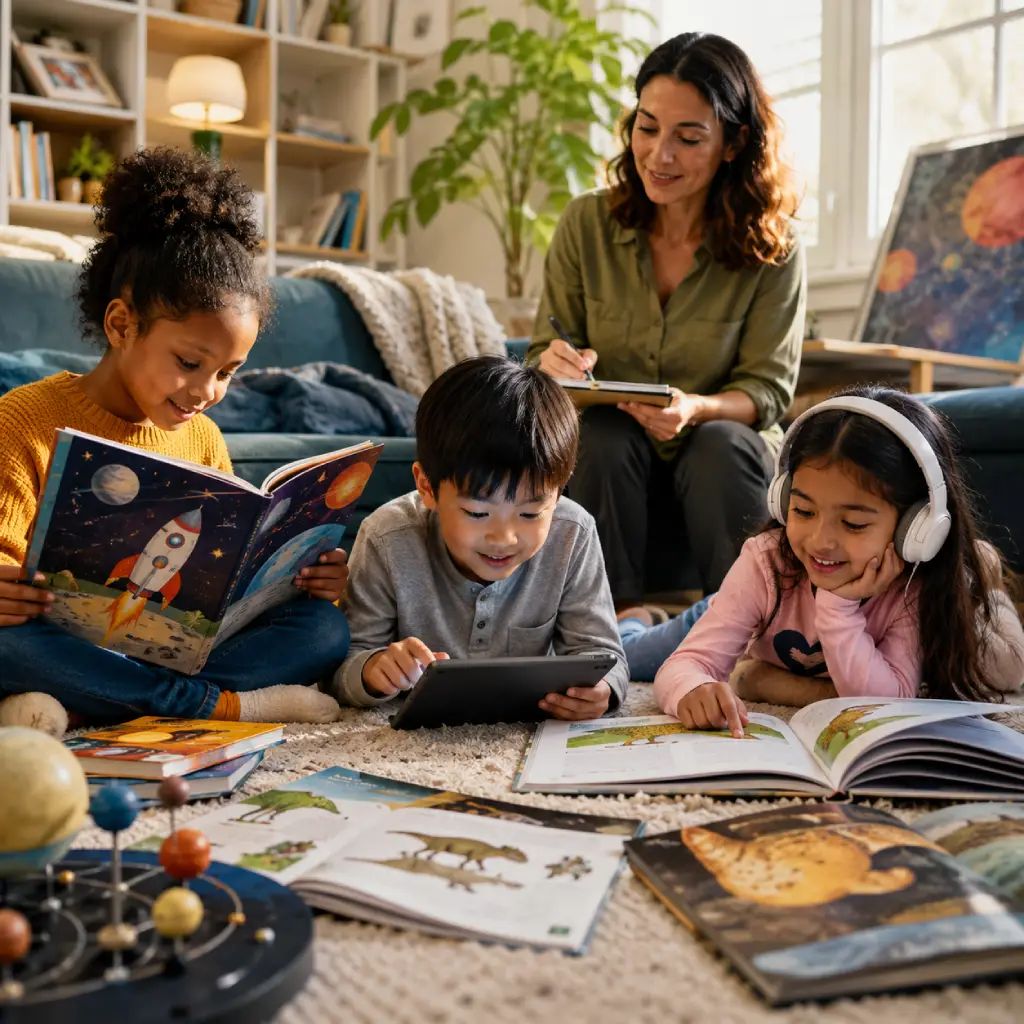
Generation Alpha is the first cohort of true digital natives. Tablets, smartphones, and AI-powered tools are not novelties to them they’re the natural environment these children move through every day.
That said, the common assumption that “kids don’t read anymore” doesn’t hold up. Research on Gen Alpha reading habits consistently shows that a majority of these children still read regularly outside school, and many parents report reading aloud to their children several times a week. What has changed is how they read and what they expect from a story:
- Shorter attention windows, higher engagement demands.Competing with games and video means a story must hook fast and reward the reader on every page.
- Format fluidity.The same child may enjoy a picture book at bedtime, an e-book on a tablet, and an audiobook in the car often for the same title.
- A strong appetite for representation.Studies indicate that a majority of Gen Alpha children prefer stories featuring diverse characters, settings, and family structures.
- Nonfiction curiosity.Roughly half of these young readers actively enjoy nonfiction space, animals, how things work not just fairy tales.
Understanding these traits is the foundation of effective ghostwriting for the “Gen Alpha” reader. Everything else in the process builds on it.
Why Ghostwriting for the “Gen Alpha” Reader Is Different
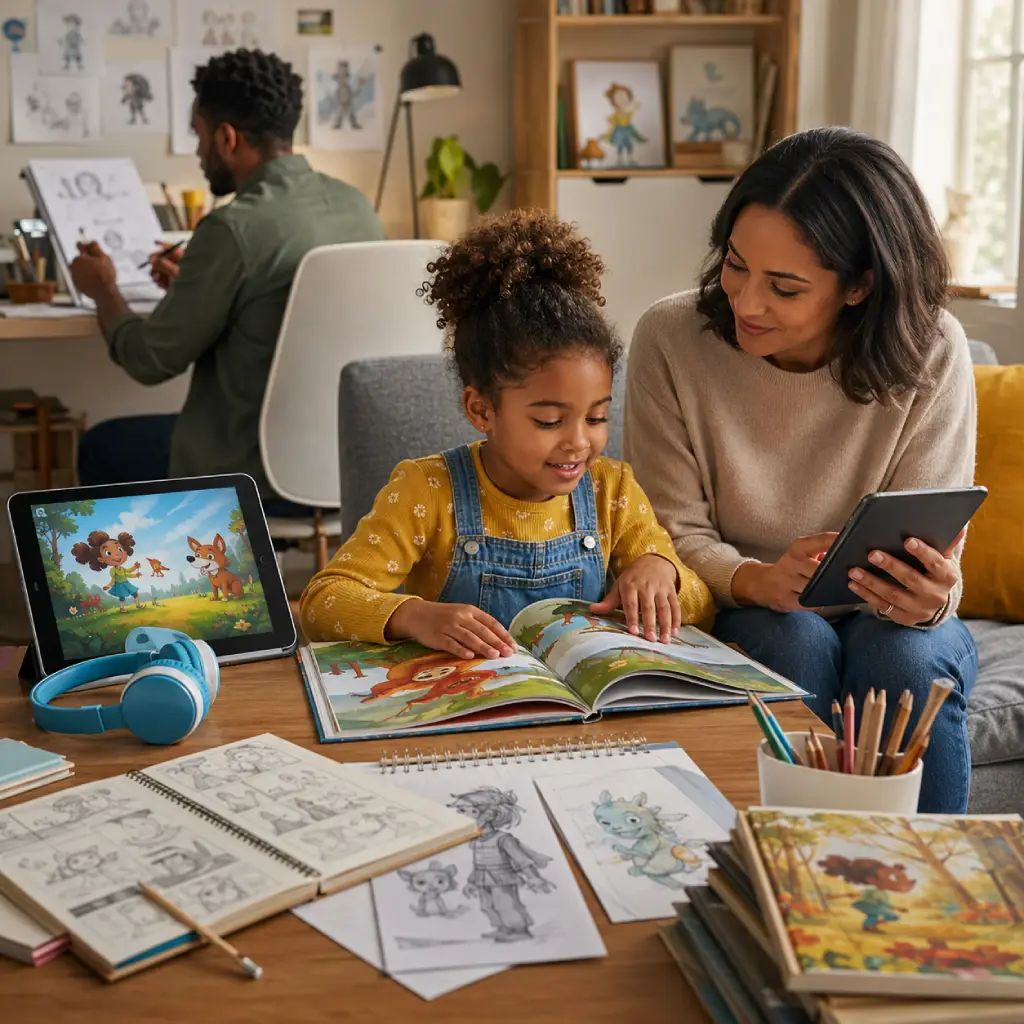
Traditional children’s book writing focused almost entirely on the printed page. Modern children’s book ghostwriting has to think about the ecosystem around the book.
The Story Must Survive Multiple Formats
A manuscript today is rarely just a manuscript. It may become a print edition, an e-book, an audiobook, and even an animated read-along. A skilled ghostwriter writes prose that reads beautifully aloud, breaks cleanly across illustrated spreads, and doesn’t rely on visual gags that vanish in audio. This is also why professional manuscript formatting matters more than ever clean structure makes multi-format adaptation dramatically easier.
Pacing Has Tightened
We’ve noticed a clear shift in editorial expectations over the past few years: shorter chapters, punchier openings, more frequent “payoffs” within the story. This isn’t dumbing down it’s respecting how Gen Alpha processes narrative. Even classic story arcs now get compressed setups and faster inciting incidents.
Parents Are the Real First Audience
Here’s a detail many first-time authors miss: Gen Alpha children rarely buy their own books. Parents do and a large share of them research titles online before purchasing. That means your book’s themes, values, and educational payoff must resonate with a millennial parent scanning reviews, while the story itself must delight a seven-year-old. A good ghostwriter writes for both audiences simultaneously.
Key Trends Shaping Modern Children’s Book Ghostwriting
1. Interactive and Participatory Storytelling
Gen Alpha doesn’t just consume stories a striking number of these children create their own digital stories, comics, and videos. Books that invite participation (questions to the reader, choose-your-path elements, activities, prompts) mirror that creative instinct and consistently perform well.
2. Values-Forward Narratives
Emotional intelligence, kindness, resilience, environmental awareness, and inclusion are no longer niche themes; they’re near-standard requests in children’s book briefs. The craft challenge is weaving these values into plot and character rather than preaching and this is precisely where experienced ghostwriters earn their fee.
3. Series Thinking From Day One
Because Gen Alpha readers bond with characters across platforms, publishers and self-publishing authors increasingly plan books as series or “worlds” rather than one-offs. A ghostwriter who builds an extensible character universe with room for sequels, spin-offs, and merchandise adds long-term commercial value to your project.
4. Audio-First Writing
With audiobook consumption among children growing steadily, rhythm, repetition, and read-aloud musicality have moved from nice-to-have to essential. We now routinely test manuscripts by reading them aloud before delivery.
5. The Human Touch as a Selling Point
Ironically, in an era of AI-generated content flooding online marketplaces, genuinely human, emotionally authentic storytelling has become a differentiator. Parents and publishers alike are actively seeking books with a distinct voice something the broader growth of the ghostwriting market reflects clearly.
How to Work With a Ghostwriter on a Gen Alpha Book
If you have a story idea but need professional execution, here’s the process we recommend:
Start with the age band, not the plot. “Children’s book” spans board books (0-3), picture books (3-7), early readers (5-8), chapter books (7-10), and middle grade (8-12). Each has strict conventions for word count, vocabulary, and structure. Nail this first – our detailed children’s book ghostwriting guide breaks down each category.
Define the takeaway. What should a child feel or learn by the last page? One clear emotional takeaway beats three muddled morals.
Brief the illustrator relationship early. In picture books, text and art share the storytelling load roughly 50/50. Your ghostwriter should write with illustration notes in mind, leaving visual space rather than describing everything in prose.
Vet your writer properly. Ask for children’s-genre samples specifically, check their understanding of age-band conventions, and confirm ownership and confidentiality terms in writing. If you’re unsure what to look for, we’ve outlined the green flags and red flags in our guide to identifying a professional ghostwriter.
Plan for revision rounds. Children’s text looks simple but is unforgiving every word carries weight. Two to three structured revision rounds is normal and healthy.
For authors outside India considering an Indian ghostwriting partner, the workflow is well-established and cost-effective; our piece on ghostwriting for international clients explains how cross-border collaboration typically works.
Frequently Asked Questions
What is ghostwriting for the “Gen Alpha” reader?
It’s the practice of professionally writing children’s books credited to you as the author — specifically crafted for children born from 2010 onward, accounting for their digital-native habits, shorter attention spans, multi-format consumption, and preference for diverse, interactive, values-driven stories.
How long should a children’s book for Gen Alpha be?
It depends on the age band: picture books typically run 500-1,000 words, early readers 1,000-2,500, chapter books 5,000-15,000, and middle-grade novels 25,000-50,000. Gen Alpha trends favor the shorter end of each range with tighter pacing.
Do print books still matter for this generation?
Yes. Despite heavy screen use, research shows many Gen Alpha children – and their parents – still value physical books, especially for bedtime reading. The smart strategy is print-plus-digital, not either/or.
How much does children’s book ghostwriting cost?
Costs vary widely by length, complexity, and writer experience from a few hundred dollars for a short picture book text to several thousand for a middle-grade novel. Always weigh portfolio quality over price alone.
Will the ghostwriter own any rights to my book?
No with a proper contract, full copyright transfers to you upon payment, and the ghostwriter remains confidential. Make sure this is explicitly stated in your agreement.
Conclusion: Meet Young Readers Where They Are
Ghostwriting for the “Gen Alpha” reader isn’t about chasing gimmicks it’s about respecting a generation that has more entertainment options than any before it, and still choosing to reach them with a genuinely great story. Get the age band right, write for ears and eyes alike, build in values without preaching, and think in series.
If you have a children’s book idea and want it executed by writers who understand this audience, our team at Ghostwriting India has helped authors across the globe bring their stories to life. Reach out for a free consultation, and let’s create a book Gen Alpha will actually put their screens down for.


